Free shipping from €50
Advice from espresso experts
Fast delivery
Enter search term...
Learn & understand

Espresso knowledge

From the basics to perfect extraction.

Espresso fundamentals

Understanding the essence

Espresso fundamentals

What is espresso?

Espresso is more than just concentrated coffee. It's a preparation method that presses hot water through finely ground coffee under pressure. The result: a rich, concentrated cup with the characteristic crema layer.

The role of pressure

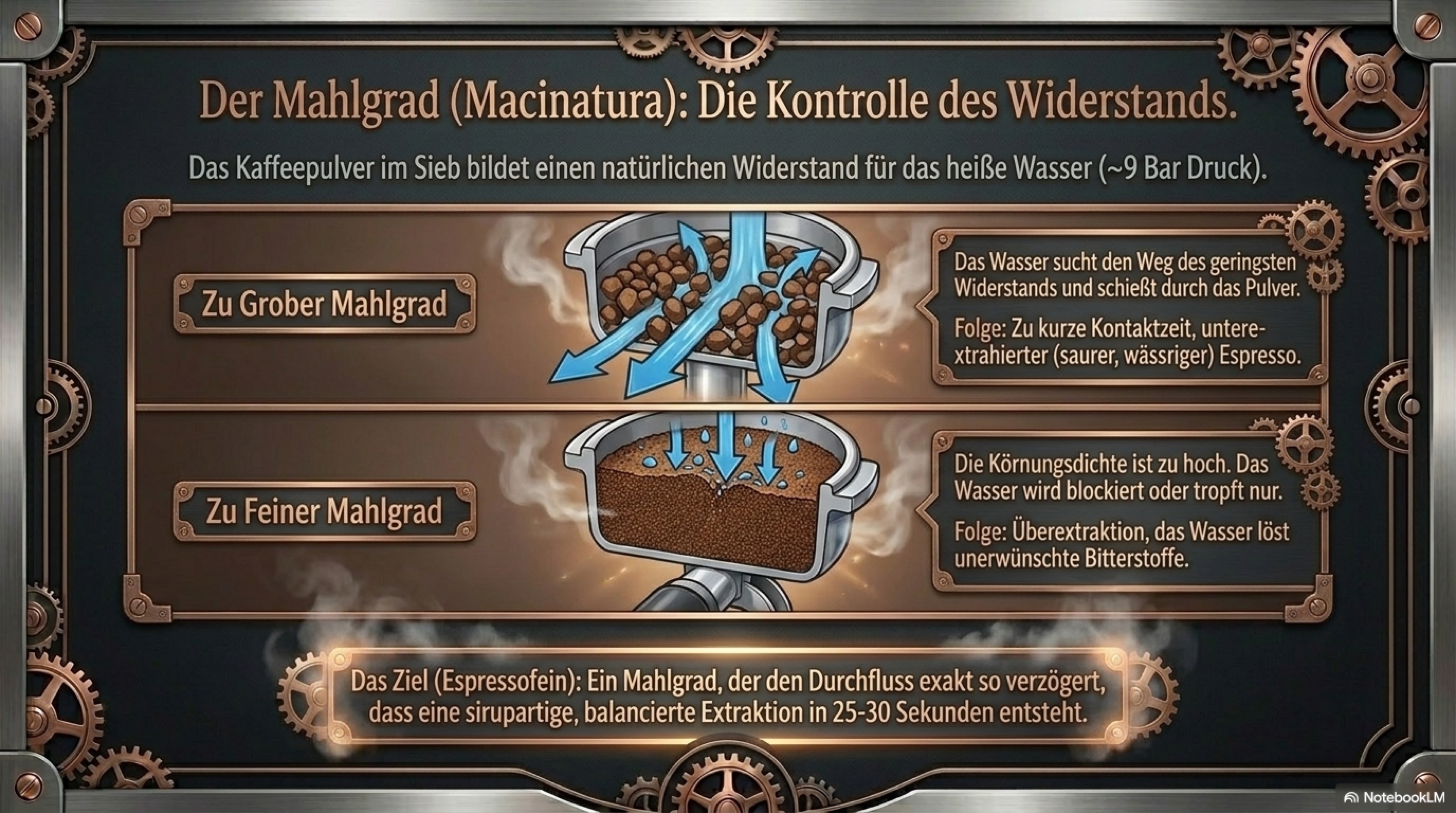
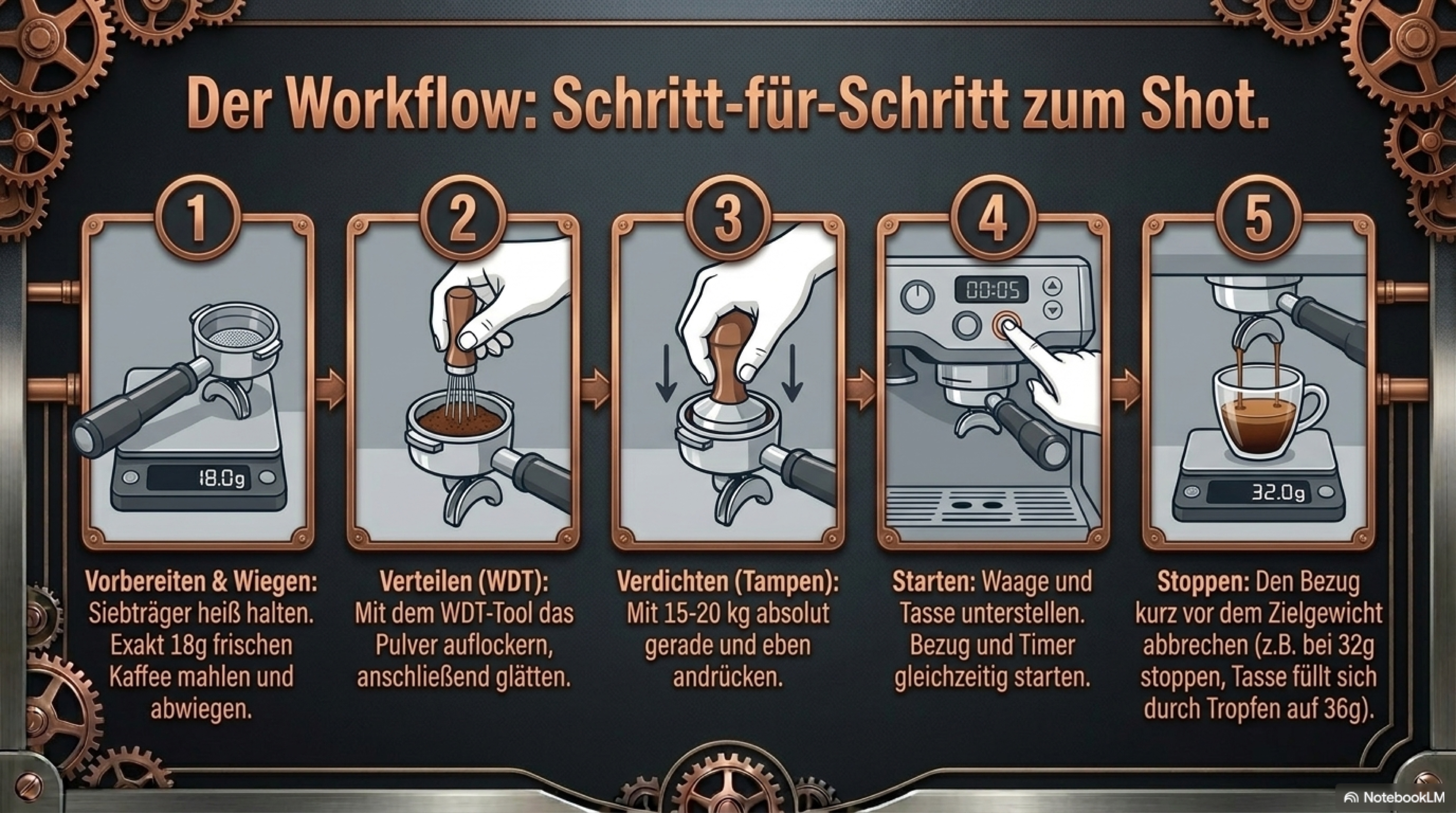
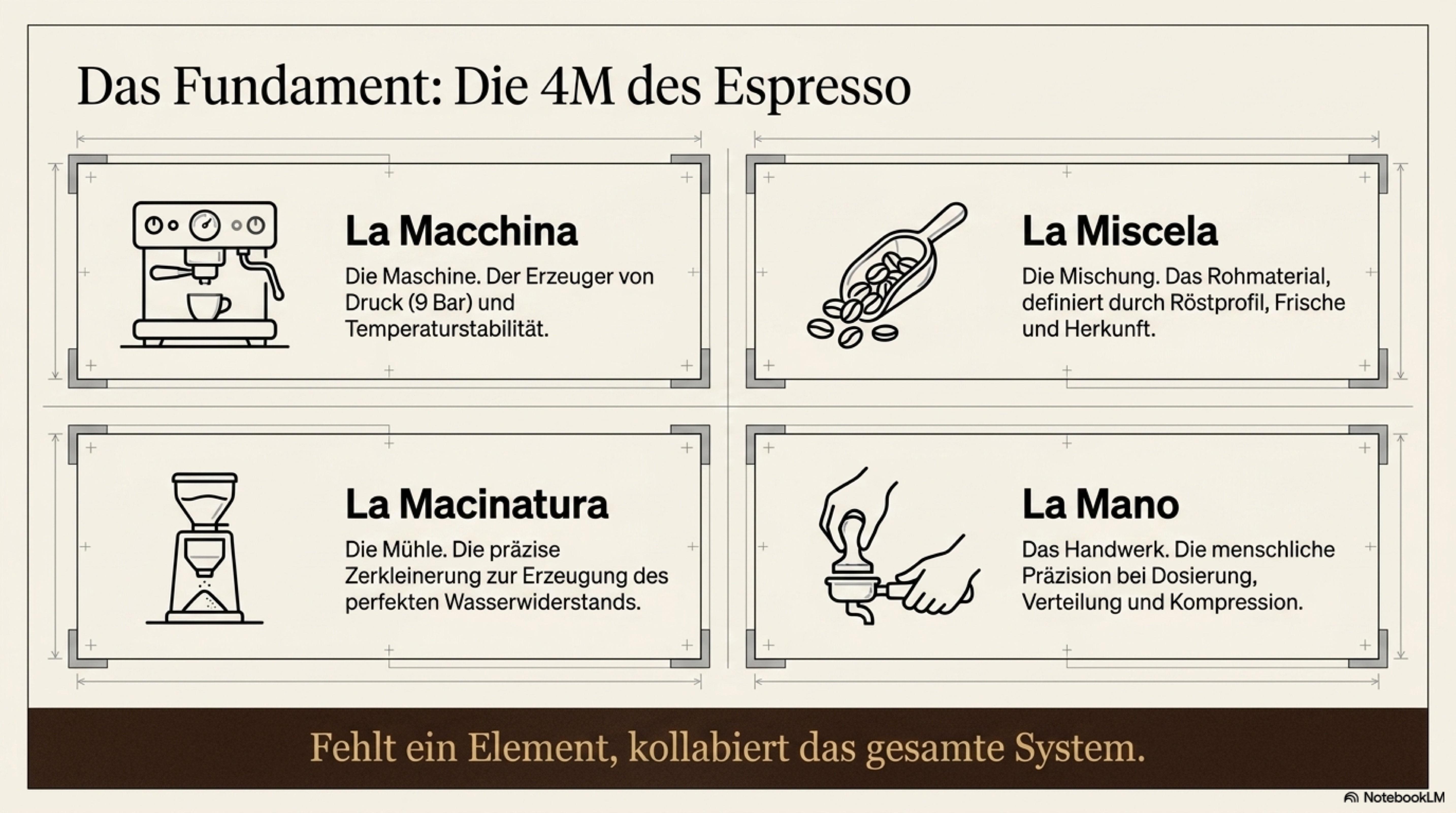
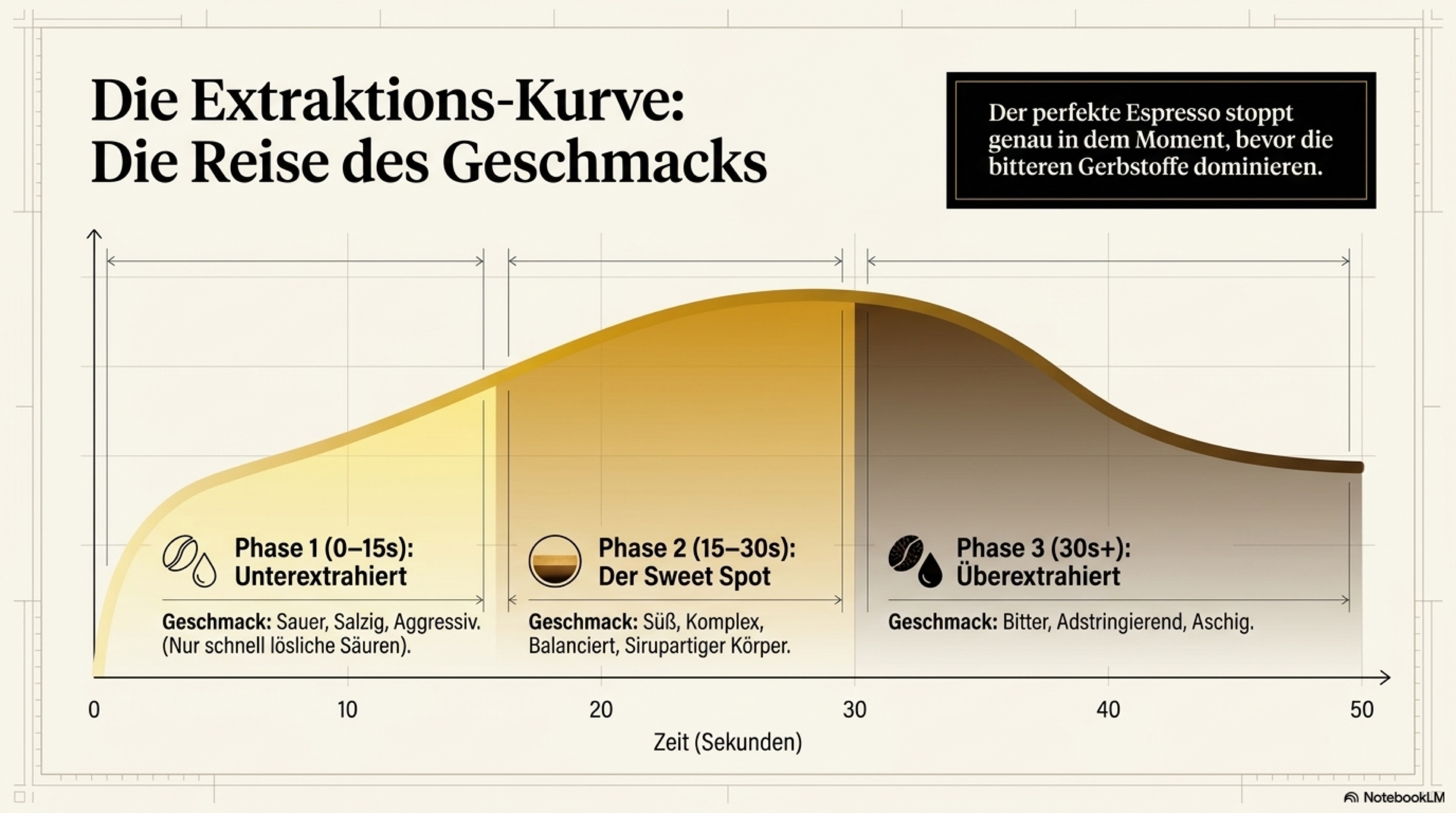
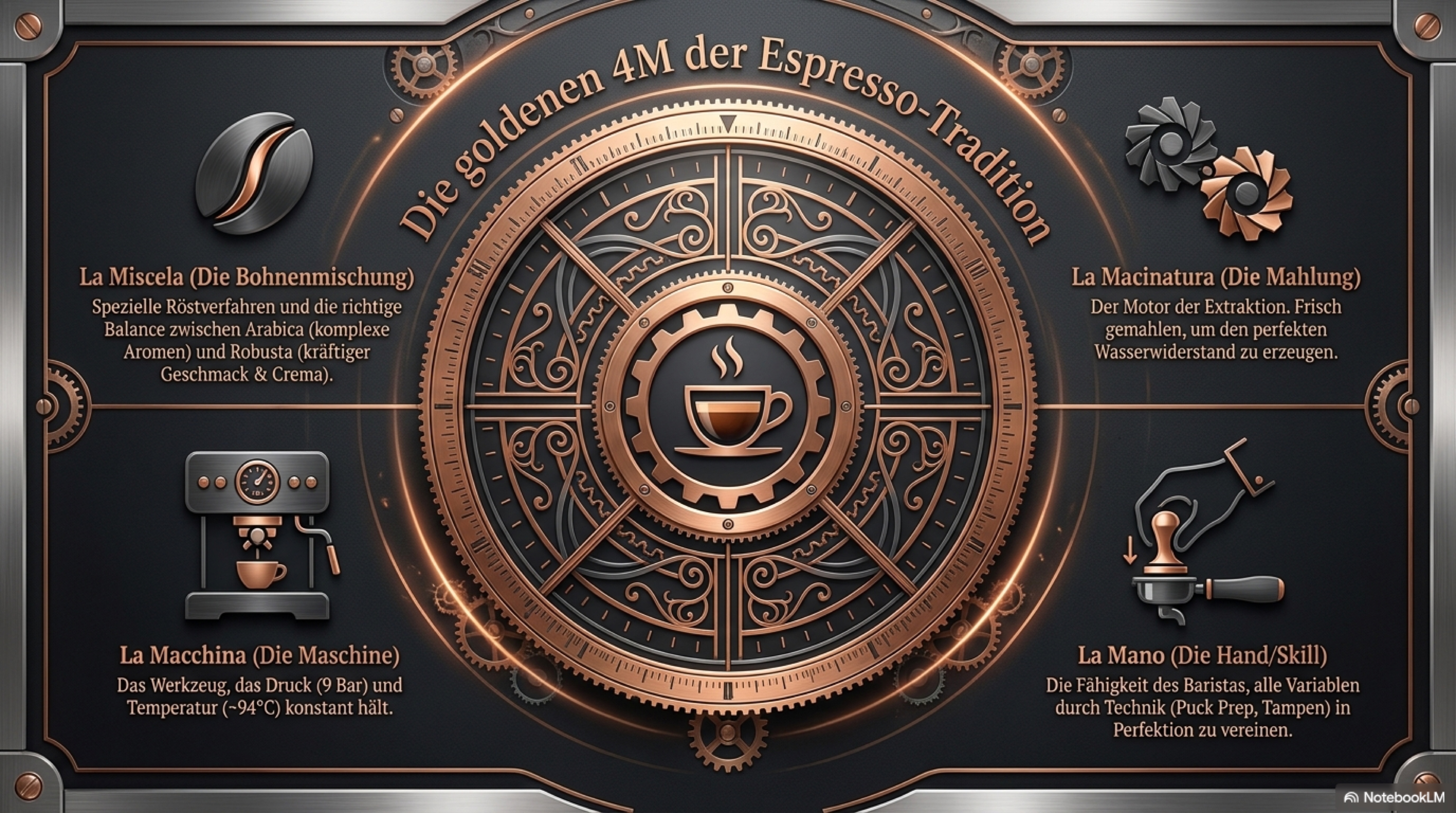
The espresso extraction pressure of about 9 bar is decisive. It pulls the aromas and oils out of the beans in a short time — ideally 25 to 30 seconds. Too little pressure leads to weak extraction, too much to over-extraction.
Grinding & tamping

Preparation matters

Grinding and tamping

The right grind

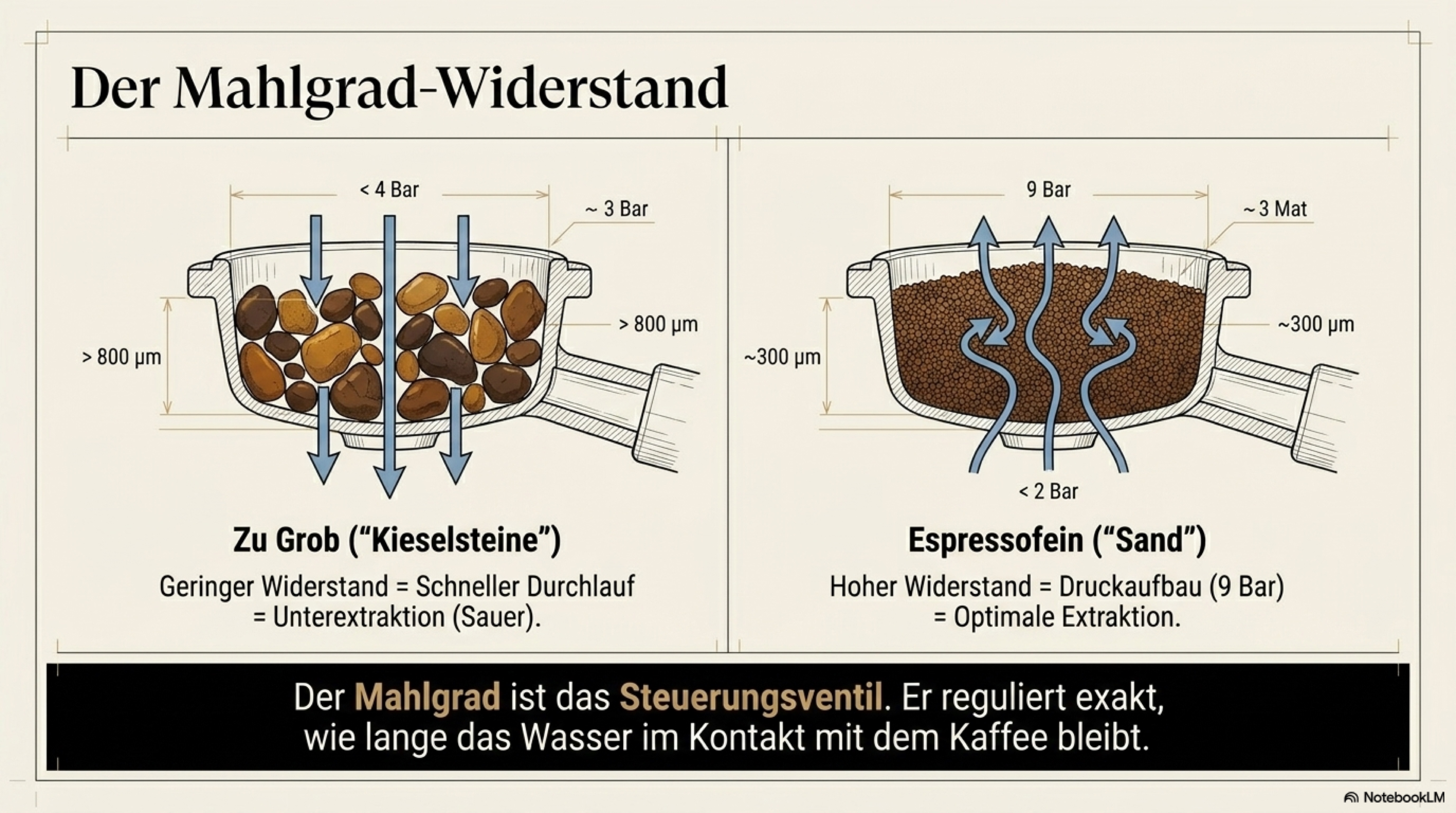
Grind size is the foundation of a good espresso. Too coarse and water flows through fast, leading to under-extracted, sour espresso. Too fine and the flow takes too long, leaving bitter notes.

Tamping — the press

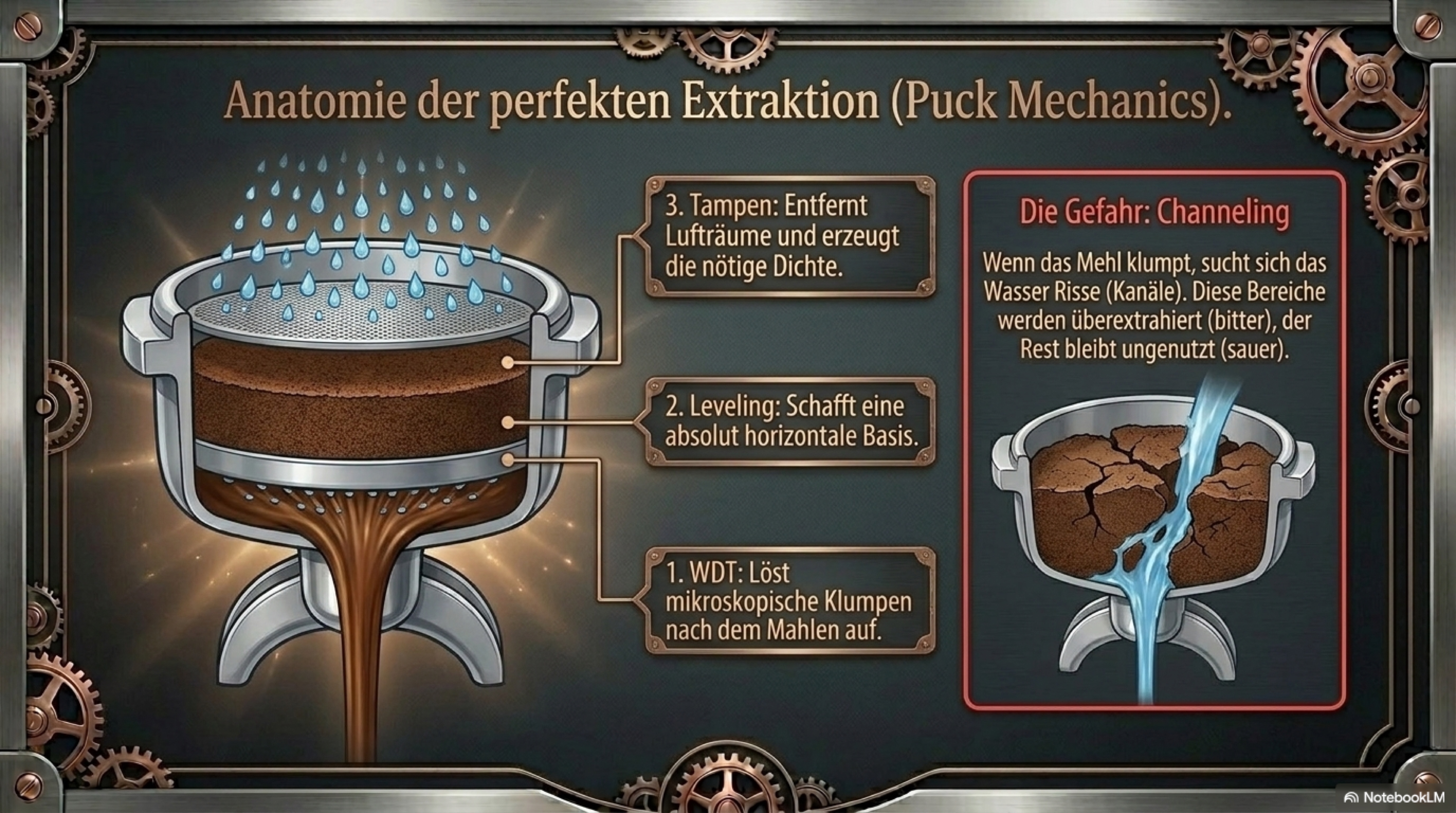
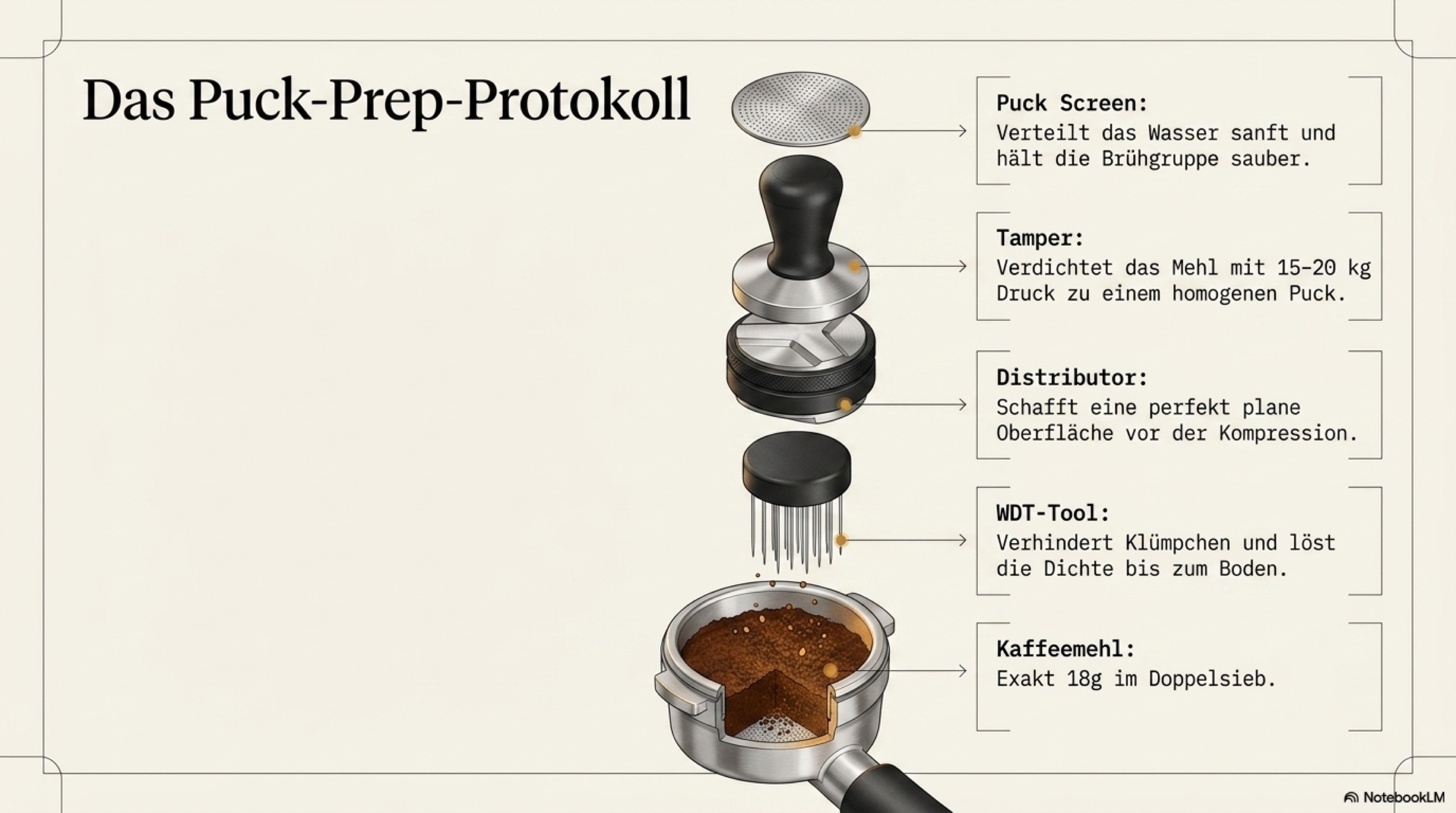
Tamping is the art of pressing the coffee grounds evenly into the portafilter. A consistent, level pressure of around 30 kg is ideal. A poorly tamped puck causes uneven water paths and bad extraction.

Temperature & flow rate

Precision in detail

Water temperature

The optimal temperature

The ideal brew temperature is between 90 and 96 °C. This range allows optimal extraction: hot enough to release the aromas, not so hot that they start to burn. Different coffees prefer different temperatures within this range.

Flow rate & time

The ideal flow takes 25 to 30 seconds and produces about 30 ml of espresso. That's no accident — it's the time needed to extract the aromas optimally.

Tasting & quality

Recognising the perfect espresso

Tasting

The crema

The hazelnut-brown crema is a key quality indicator. It should be 1 to 2 mm thick, dense, stable — and hold for at least 1 to 2 minutes. A thin crema or none at all points to extraction that's too fast or otherwise off.

Flavour profiles

A well-extracted espresso shows notes of chocolate, nuts and caramel with a pleasant sweetness. Acidity should be present but balanced — never sharp or unpleasant. A bitter aftertaste suggests over-extraction.

Espresso machine types

The different systems

Machine types

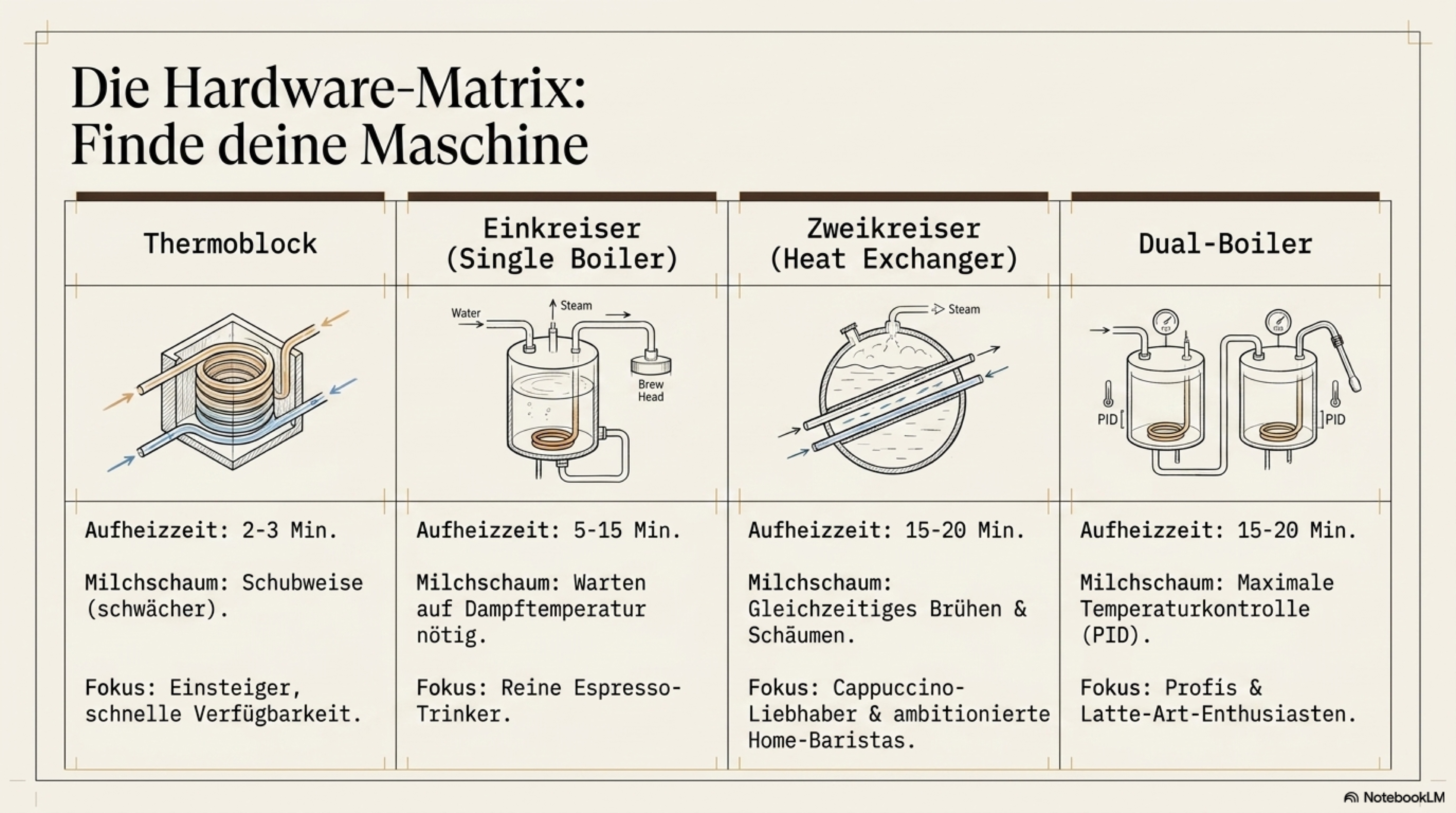
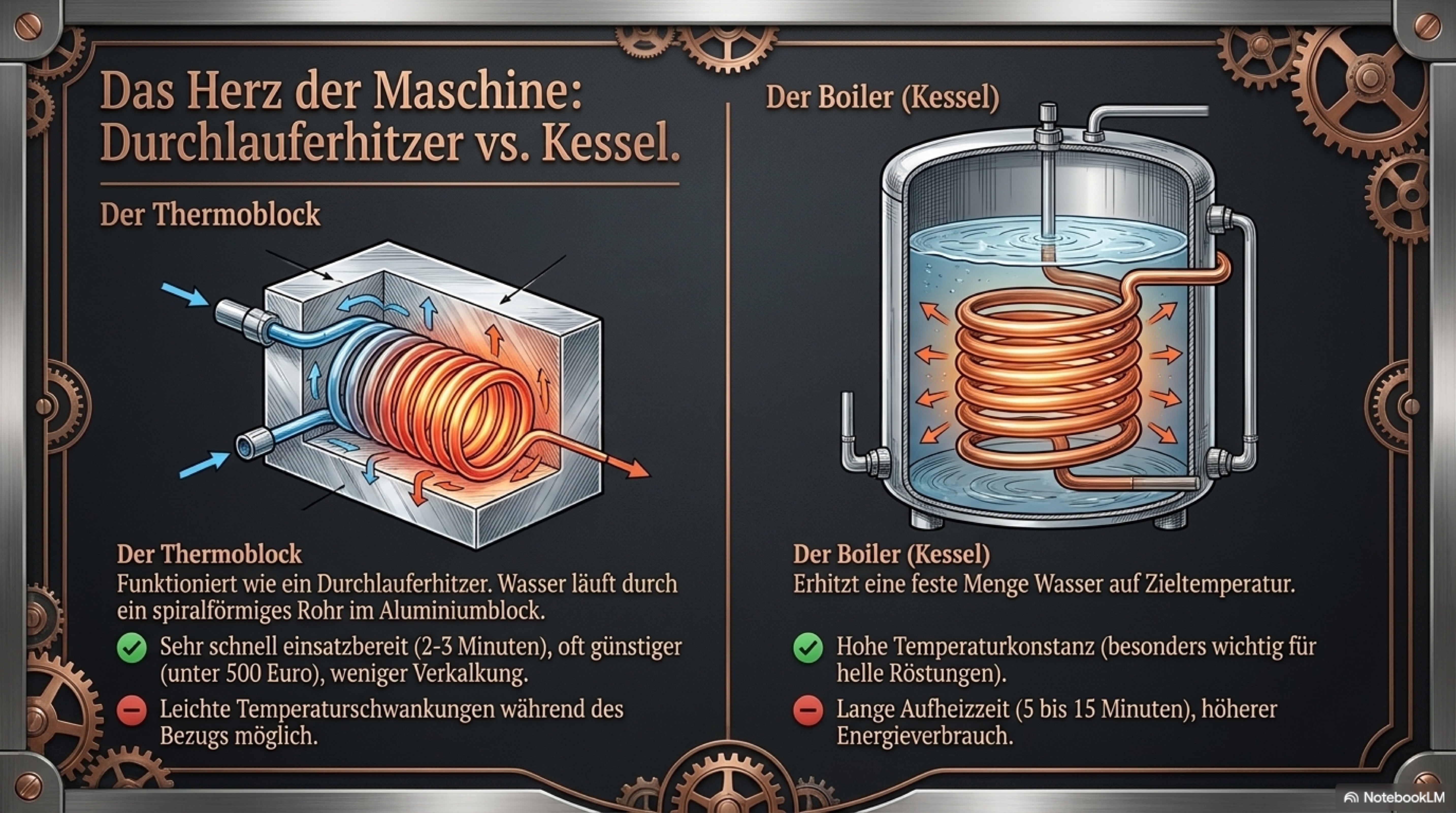
Portafilter machines

The classic espresso machines with a separate portafilter. They give you maximum control over every aspect of the brew and are the choice of pros and enthusiasts. Our omaneo.GUDRUN is a quality portafilter machine for home use.

Super-automatics

These machines grind, tamp and pull the espresso at the push of a button. Ideal for beginners and anyone who wants quick, consistent results.

Tips for the home barista

Practical advice

Tips

The right grinder

Invest in a quality grinder. Grind consistency matters just as much as the espresso machine itself. A bad grinder will undermine even the best machine.

Water quality

Use filtered or mineral water. Water that's too hard causes limescale; water that's too soft can dull the flavour.

Regular cleaning

A well-kept machine is the key. Clean the portafilter and basket after every use, and run deeper cleaning cycles regularly.

Espresso variations

Variations & differences

Espresso variations

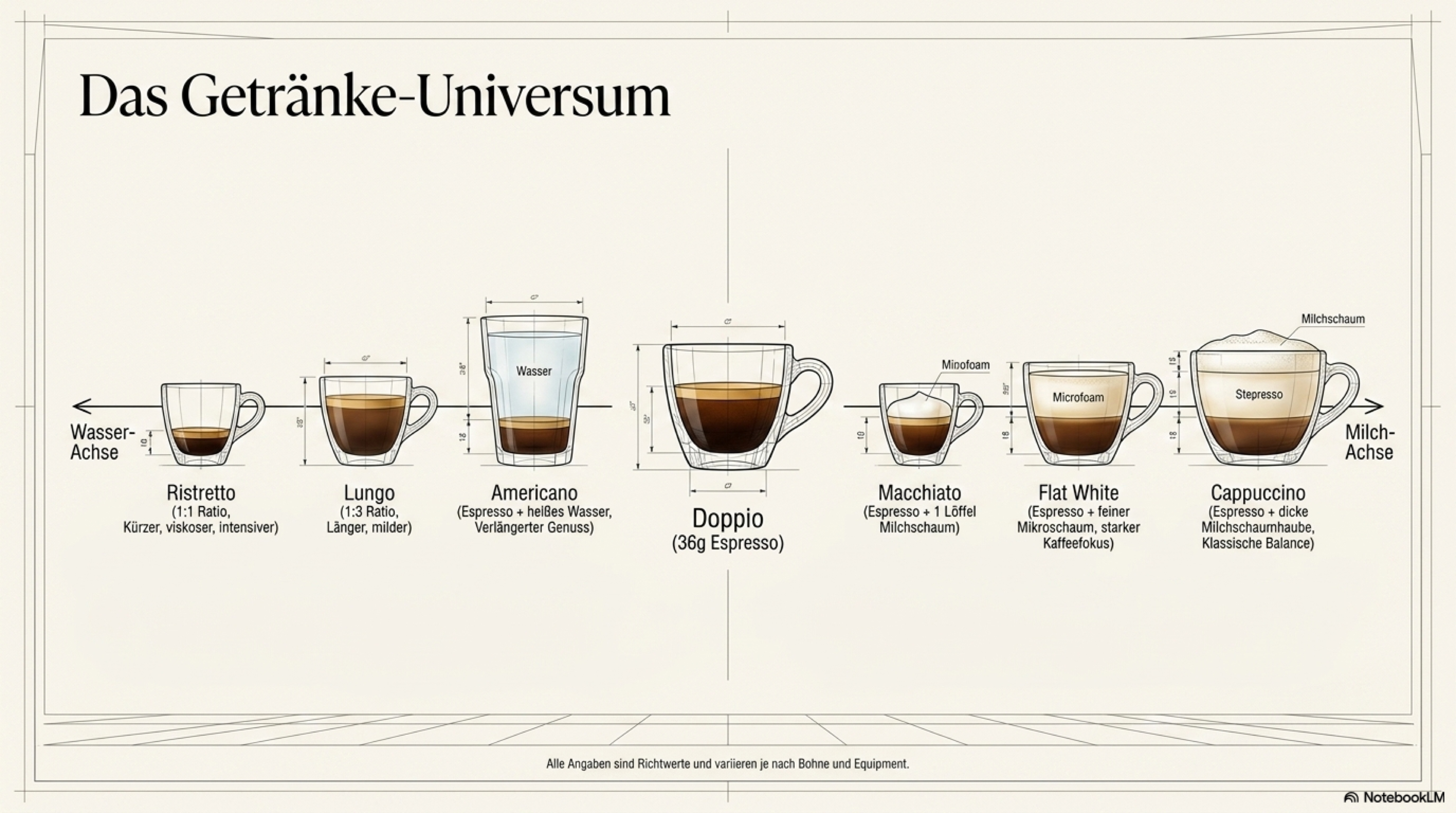
Ristretto — the short one

A smaller, more concentrated espresso of about 15–20 ml. Ristretto means "restricted" and emphasises the most intense aromas of the coffee. Perfect for intense flavour experiences.

Lungo — the long one

A longer espresso of about 40–60 ml. The longer flow extracts more compounds. The result is less concentrated but more complex — and naturally larger in volume.

Standard espresso

The standard espresso at about 25–30 ml. The perfect balance between concentration and volume, considered ideal by most baristas.

Milk foam & latte art

The art of steaming milk

Milk foam

Perfect milk foam

Good milk foam comes from the right balance of air and steam. Heat the milk to 60–65 °C. You're aiming for fine, creamy microfoam — not big, bubbly foam.

Latte art basics

Latte art is the craft of pouring patterns into the coffee. Rosetta, tulip and heart are the favourites. With practice and the right technique, impressive designs emerge.

The right temperature

Never heat milk above 70 °C — it loses sweetness and flavour. Too cool and the foam won't set. 60–65 °C is the sweet spot.

Equipment care & cleaning

Longevity & performance

Equipment care

Daily cleaning

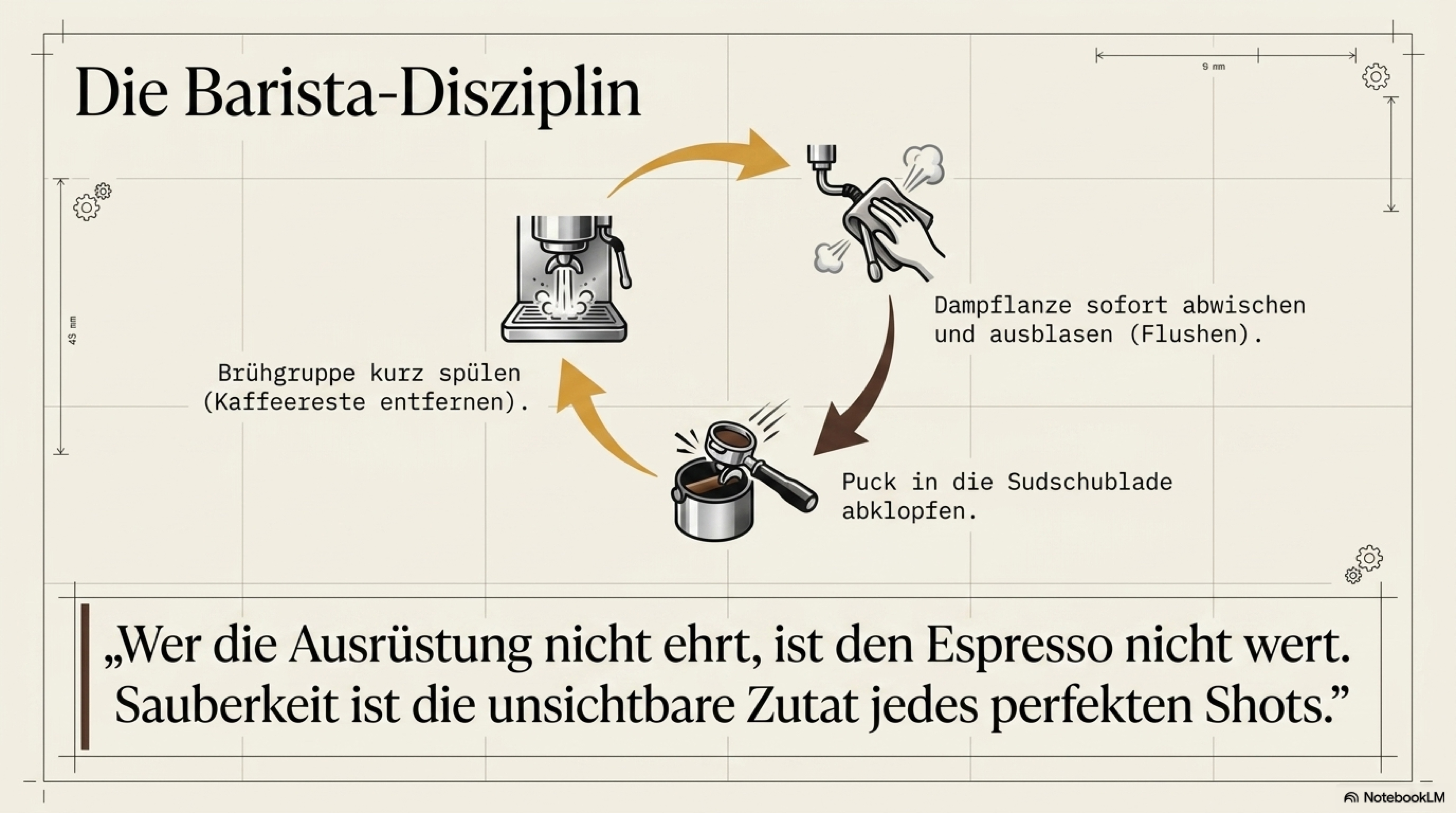
After each shot, clean the portafilter and basket right away. Coffee grounds that dry harden and become hard to remove. A quick rinse prevents buildup.

Weekly cleaning

Once a week, thoroughly clean every removable part. Use a dedicated espresso cleaner (Cafiza or similar). The group, portafilter and basket benefit from a deep clean.

Grinder maintenance

Clean espresso grinders regularly. Run cleaning tablets (Grindz) through the burrs to remove coffee oils. This extends the life of the burrs and improves flavour.

Common mistakes & fixes

Troubleshooting for the home barista

Common mistakes

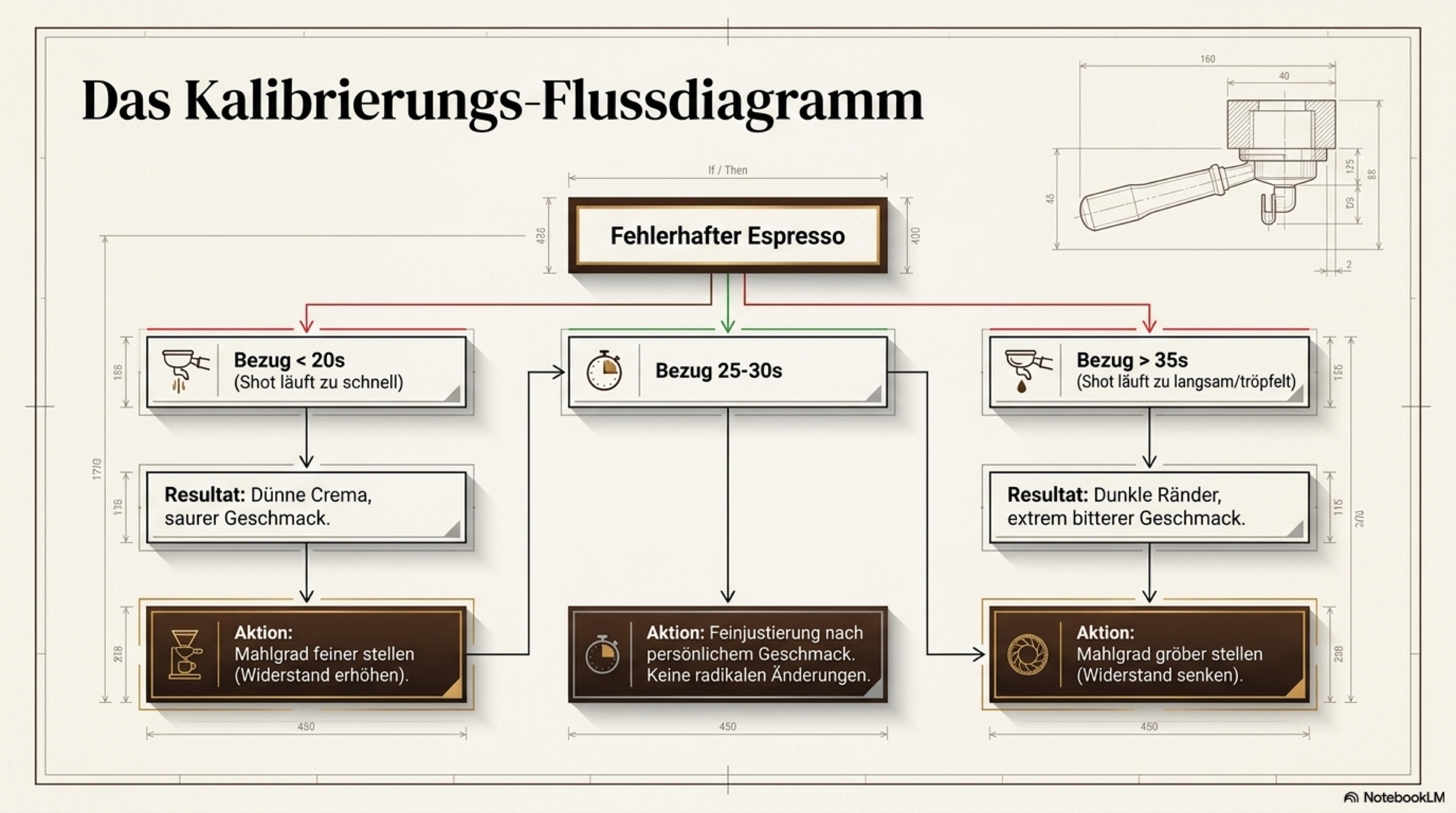
Too fast (under-extracting)

Espresso flows through too quickly. Causes: grind too coarse, not enough pressure when tamping, or a loose basket. Fix: finer grind, firmer tamp, check the basket.

Too slow (over-extracting)

Espresso barely flows. Causes: grind too fine, too much pressure, or a clogged basket. Fix: coarser grind, lighter tamp, clean the basket.

Weak or no crema

The characteristic foam layer is missing or thin. Causes: beans too fresh or too old, wrong extraction. Fix: use fresh beans, check the extraction time (25–30 seconds).

Coffee varieties & origins

The world of coffee

Coffee varieties

Arabica vs. Robusta

Arabica beans (around 60 % of the world's coffee) offer more complex aromas, more acidity and finer notes. Robusta has more caffeine and an earthy, strong flavour. Most espresso lovers prefer Arabica.

Origin regions

Ethiopia brings floral, fruity notes. Brazil offers chocolatey, nutty profiles. Colombia delivers balanced, medium roasts. Every region has its own character.

Roast profiles

Light roasts emphasise acidity and freshness. Medium roasts balance acidity and body. Dark roasts bring depth, roast notes and less acidity. For espresso, a medium-to-dark roast is often ideal.

Espresso recipes & variations

Classics & creations

Espresso recipes

Cappuccino

1 espresso + 75–100 ml steamed milk + 75–100 ml milk foam. The classic with plenty of foam. Traditionally enjoyed at breakfast.

Macchiato

1 espresso + just a touch of milk foam. "Macchiato" means "marked" — the espresso is dressed with only a trace of foam. More intense than a cappuccino.

Flat white

1–2 espressos + 120–150 ml steamed milk with fine microfoam. The flat white is creamier and silkier than a cappuccino — less foam, more milk.

Americano

1–2 espressos + 150–200 ml hot water. Espresso diluted with hot water — not the opposite of "shot & drip". Intense, but less concentrated than straight espresso.

Essential barista accessories

Tools for the home barista

Barista accessories

Tamper & distributor

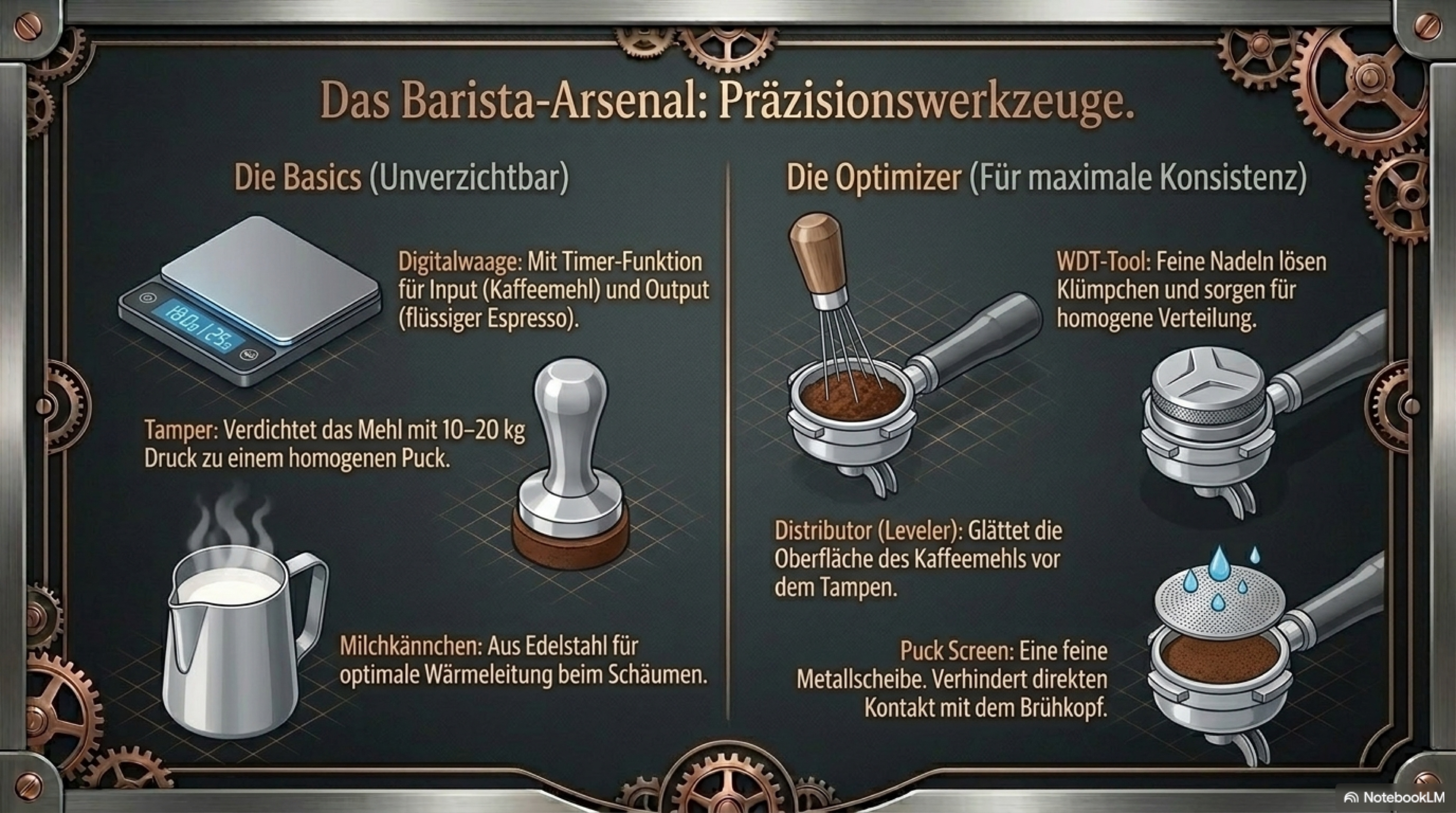
A good tamper is essential for even pressing. A distributor (WDT tool) helps loosen the grounds before tamping and avoids channelling. Together they deliver perfect extraction.

Espresso scale

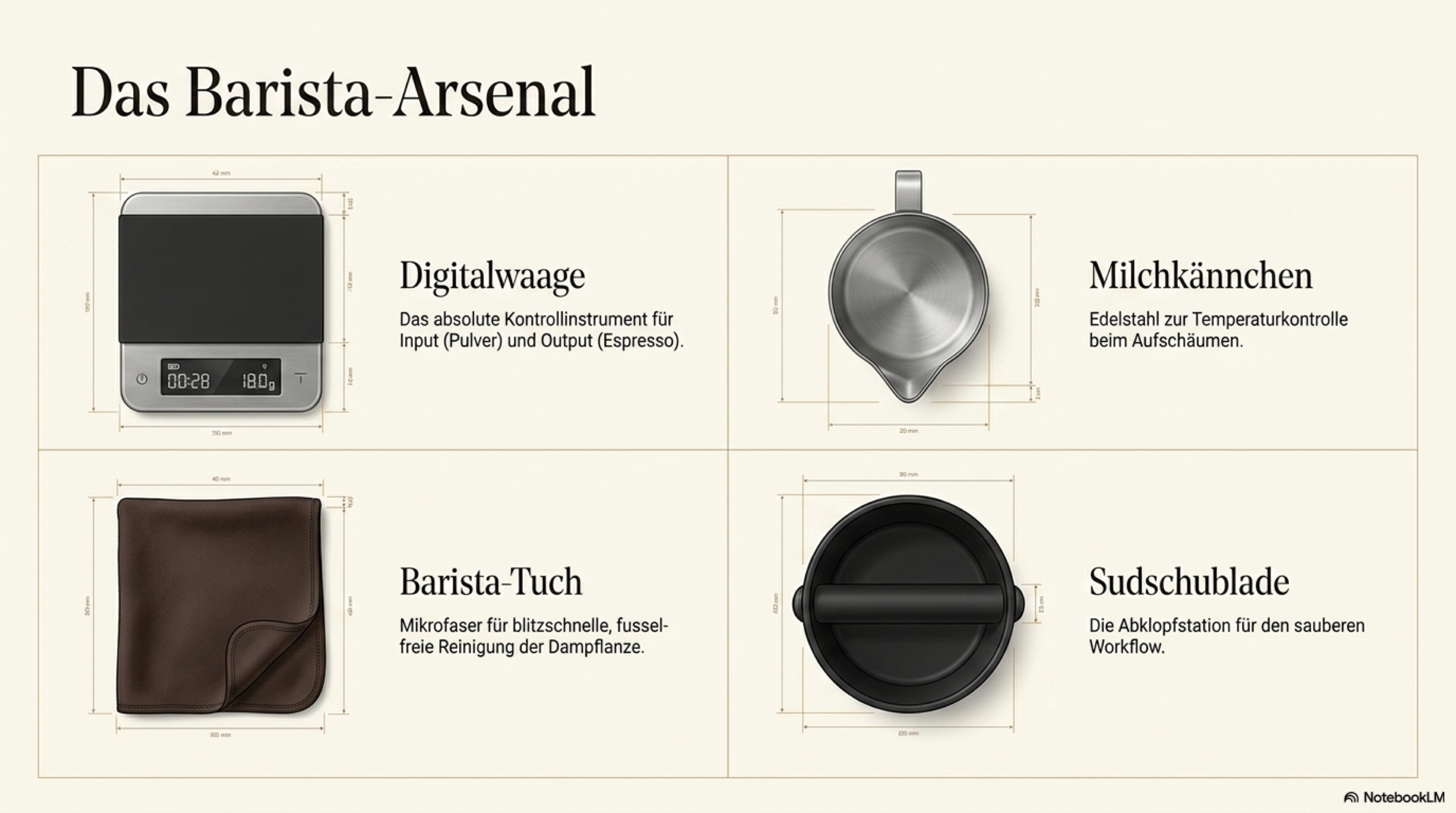
A digital scale accurate to the gram is essential. It enables precise dosing and weighing of the output. Consistency is the key to repeatable results.

Milk pitcher & thermometer

A good stainless-steel pitcher (350–600 ml) is essential for latte art. A thermometer helps you hit the right temperature — ideally between 60 and 65 °C.

Knock box & brush

A knock box catches the spent coffee puck when you empty the portafilter. A small brush removes grind residue. Small tools, big impact on cleanliness.

Green beans & roasting

From the plant to the cup

Green beans and roasting

Green coffee beans

Raw coffee beans (green beans) are unroasted and store for a long time. They're the basis for custom roasts and open the door to home roasting.

Roasting process & development

Roasting transforms the green bean completely. First crack marks the start of caramelisation. Second crack brings darker roasts. The roast development shapes acidity, body and aroma.

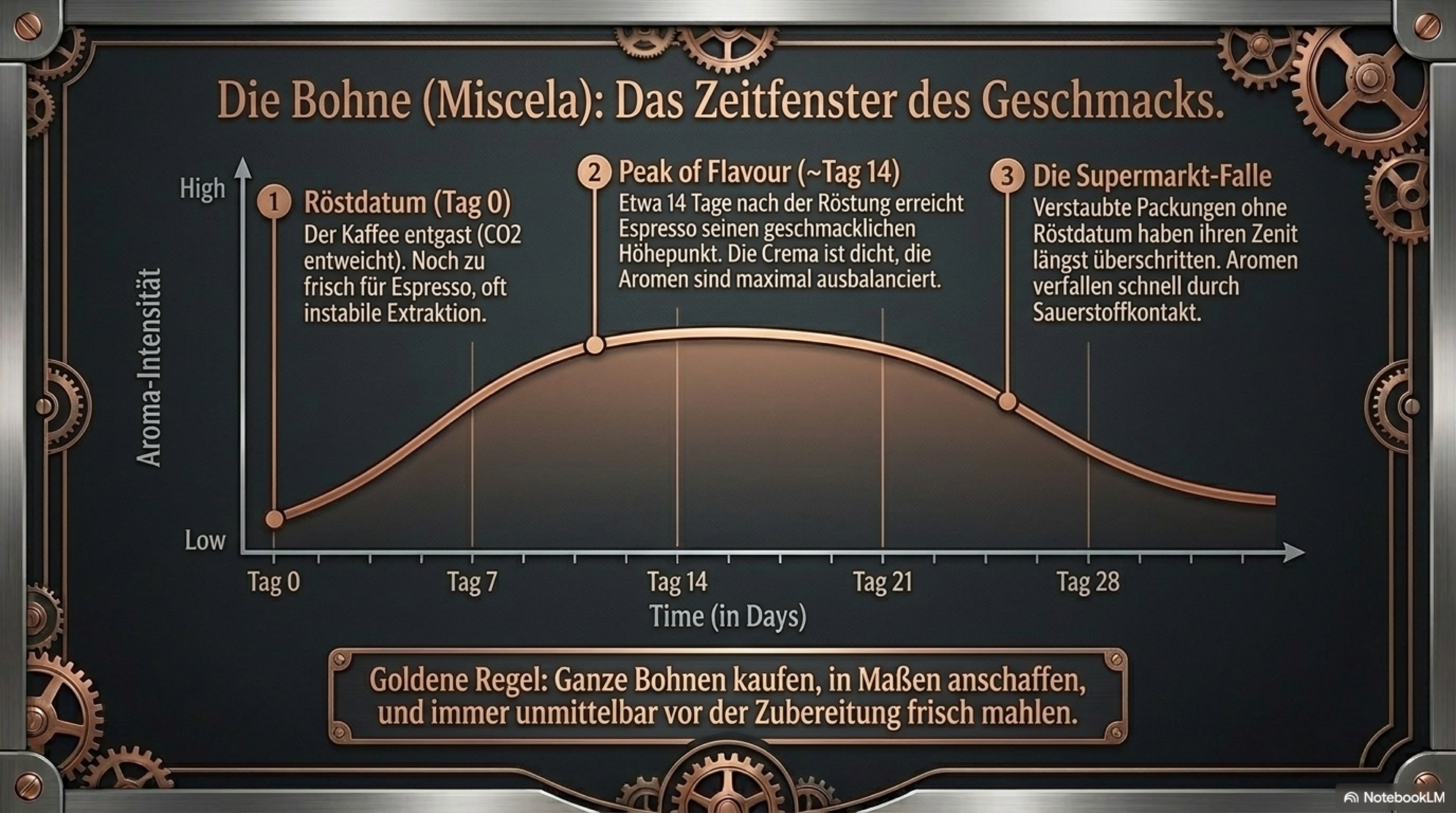
Storage & freshness

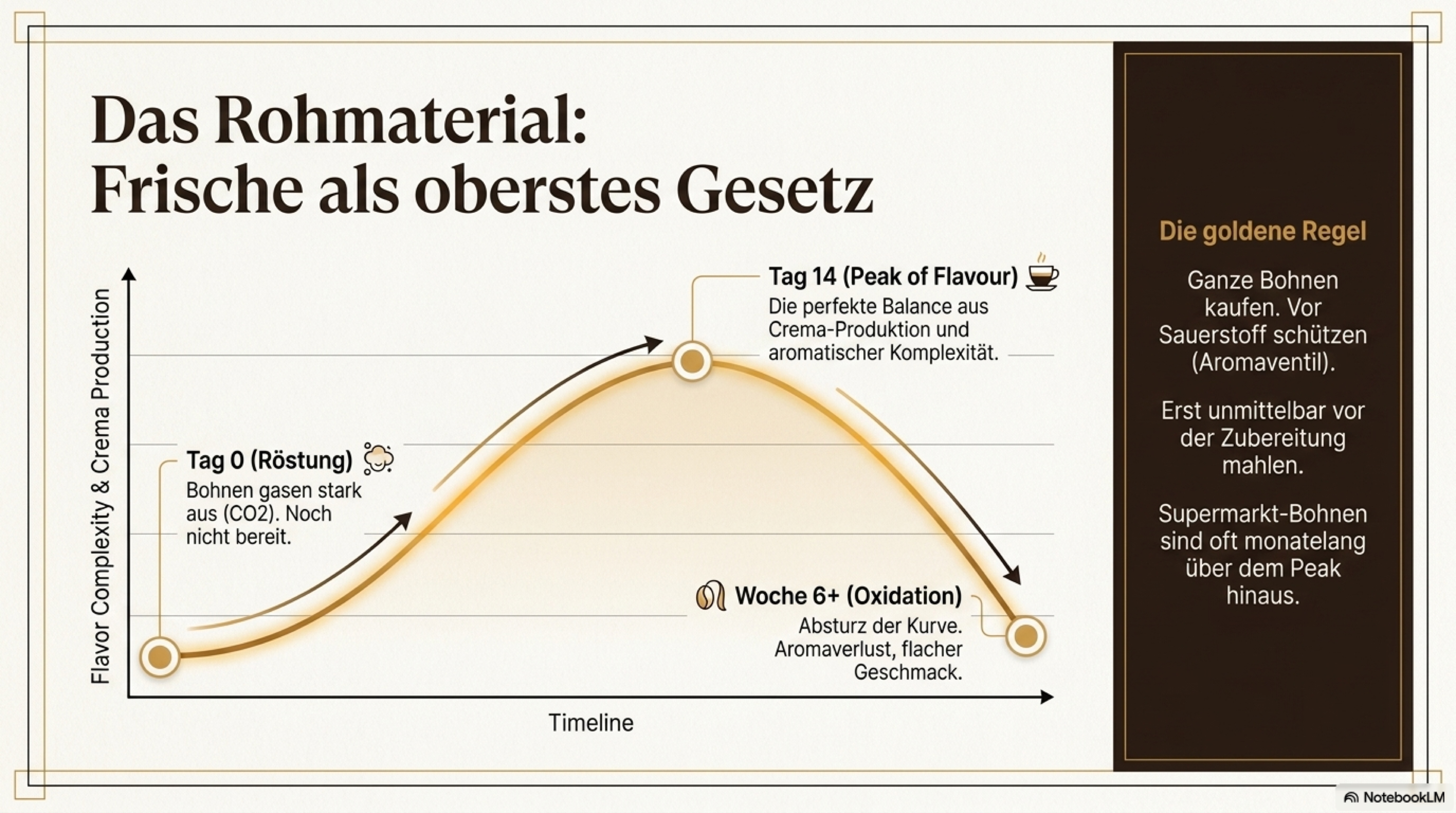
Ground coffee loses aroma within 30 minutes. Whole beans stay fresh for 2–4 weeks after roasting. Best practice: buy smaller amounts more often, not big stockpiles.

Maintenance & descaling

Longevity of your equipment

Maintenance and descaling

Regular descaling

Limescale lowers the efficiency of the heating element and dulls the taste. Depending on water hardness, descale every 2 to 4 weeks. Use descalers made for espresso machines.

Backflush & solenoid valve

Backflushing removes coffee residue from the group. Make it a daily routine. A reliable solenoid valve is critical for the machine's lifespan.

Long-term maintenance

Replacing gaskets and pump seals is normal maintenance. A well-cared-for machine can last 10 to 20 years. Have your machine serviced by professionals.

Portafilters & baskets

The heart of the brew

Portafilters and baskets

Portafilter types

The standard portafilter attaches to the machine via a quick coupling. E61 portafilters, common in high-end machines, have built-in thermal mass and pre-heating.

Basket sizes & double spout

Standard baskets come in single (7–9 g), double (18–20 g) and triple (27–32 g). The double-spout outlet splits the espresso across two cups — handy for couples.

Bottomless portafilters

The bottomless portafilter makes extraction visible — the barista sees right away whether channelling appears or the extraction runs evenly. A diagnostic tool for improvements.

Crema — science & quality

The mark of good extraction

Crema quality

What is crema?

Crema forms when pressurised water extracts oils from the beans. These oils emulsify and form the characteristic golden-brown foam layer. Crema protects the espresso from oxidising.

Judging crema quality

Good crema is hazelnut-brown, 1–2 mm thick and holds 1–2 minutes. Thin or missing crema points to under-extraction. Very dark crema can mean over-extraction.

Crema & bean freshness

Very fresh beans (1–3 days after roasting) often produce too much crema — which can come out spongy. Ideal: beans 1–3 weeks after roasting for the best crema quality.

TDS & extraction quality

The science of extraction

TDS and extraction

TDS — total dissolved solids

TDS measures the dissolved compounds in the espresso. Typical values for espresso are 8 to 10 %. A refractometer measures the Brix value to determine TDS — precise and repeatable.

Yield & extraction percentage

Extraction percentage describes how much of the bean was extracted (18–22 % is ideal). With a 1:2 ratio and 20 g input, 40 g output means 20 % extraction — the sweet spot.

VST & sensory together

TDS measures objectively, the taste test judges subjectively. Together they help you reach repeatable results. A refractometer is a sensible investment for enthusiasts.

Pressure & flow-rate control

The parameters of extraction

Pressure and flow rate

The 9-bar standard

Espresso machines run by default at around 9 bar of pump pressure. This is the pressure used to force water through the grounds. Too little pressure means a fast flow and under-extraction.

Flow rate & extraction time

The ideal flow lasts 25–30 seconds. That's no accident — it's the time that allows optimal extraction. Too fast: under-extracted, sour. Too slow: over-extracted, bitter.

Pre-infusion

Some machines offer pre-infusion — the puck is wetted at lower pressure before the full 9 bar kicks in. This promotes more even extraction and helps avoid channels.

Pre-infusion & blooming

The start of extraction

Pre-infusion and blooming

What is blooming?

When water first hits the coffee, CO₂ is released. This is called blooming. A short contact (without full pressure) lets the coffee bed bloom and CO₂ escape, which makes the rest of the extraction more even.

Pre-infusion techniques

Manual: slowly start the water flow, wait 5–10 seconds, then bring the full pressure up. Automatic: many modern machines have pre-infusion built in — pressure ramps up gradually.

Effect on flavour & consistency

Pre-infusion can reduce channelling and make extractions more consistent. The result: less bitterness, more balanced acidity, better aroma. Especially noticeable with fresh beans.

Extraction charts & espresso maps

Visualise your extraction

Extraction charts

The espresso extraction map

The SCAA "Golden Cup" extraction map shows the perfect combination of ratio and extraction percentage. Target: 18–22 % extraction with a 1:2 ratio (20 g input, 40 g output).

Troubleshooting with charts

Sour + under-extracted? Finer grind or higher temperature. Bitter + over-extracted? Coarser grind or lower temperature. The charts help you diagnose methodically.

Understanding ratio variations

Ristretto (1:1.5) is more intense and concentrated. Lungo (1:3) is thinner and lighter. A standard espresso (1:2) is the balance. The charts show which combinations work.

Cold brew & alternative methods

Beyond espresso

Cold brew and alternatives

Cold brew — long extraction

Cold brew extracts over 12–24 hours with cold water. The result: smoother, creamier, less acidic than hot extraction. Perfect for summer drinks and iced lattes.

Aeropress & moka pot

The Aeropress creates fast, concentrated shots through pressure — similar to espresso. The moka pot uses steam pressure for a rich extraction without real espresso pressure. Both are great for home baristas.

Flavour profile differences

Espresso: intense, concentrated, with crema. Aeropress: smooth, controllable, lighter body. Cold brew: sweet, smooth, less acidic. Each method has its charm and its fans.

Machine calibration & adjustment

Fine-tuning for perfection

Machine calibration

Temperature stability

A good espresso machine should hold brew temperature to within ±2 °C. Liquid-based thermometers are often inaccurate — digital sensors are more reliable for adjustments.

Pressure measurement & adjustment

Pressure should sit at about 9 bar. An analogue manometer shows directly whether the pump is working correctly. Some machines allow pressure adjustments via set screws.

Setting maintenance intervals

After 300–500 shots: inspect gaskets and components. After 1000 shots: professional servicing. Document your maintenance — it helps with diagnostics and extends the lifespan.

Diagnosing problems by taste

Your palate as a diagnostic tool

Taste-based diagnostics

Sour = under-extraction

A bright, sour profile points to under-extraction. Fixes: finer grind, higher temperature, check the pressure, or aim for a longer shot (over 30 seconds).

Bitter = over-extraction

Dark, dry, bitter notes point to over-extraction. Fixes: coarser grind, lower temperature, extract faster (under 25 seconds), or adjust the ratio.
Watery or thin = wrong ratio

If the flavour is OK but the texture is watery: the ratio is probably too high (too much water). Reduce the output or increase the input.

Espresso cupping & tasting

Professional tasting techniques

Espresso cupping

Cupping protocol for espresso

Professional cupping follows standardised procedures. Three identical cups per sample, tasted blind, with notes scored on aroma, flavour, acidity, body and aftertaste.

Recognising notes & flavour profiles

Practise identifying tasting notes: chocolate, nuts, flowers, fruit, caramel, earth. A flavour wheel helps. With regular practice your palate improves significantly.

Comparative tasting

Compare two different roasts side by side — this sharpens the differences. Taste in this order: lighter first, darker after. Cleanse your palate with water.

Single origin vs. blends

Choosing your coffee

Single origin and blends

Single origin — terroir & character

Single origin espresso comes from a single source — a farm or region. The result: defined flavour profiles, recognisable characteristics, transparency. Ideal for tasting and comparison.

Blends — consistency & balance

Blends combine beans from different origins. The goal: consistency all year round, balance between different notes and stability against seasonality.

Practical applications

Single origin for beginners learning — the differences are clearer. Blends for coffee shops for steady flavour. Experiment with both — your preferences will develop.

Roast profiles & origins

Geography of flavour

Roast profiles and origins

Geographic differences

Ethiopia: floral, fruity, complex acidity. Brazil: chocolatey, nutty, heavier body. Colombia: balanced, caramel, apple. Every region has unique character.

Altitude & harvest times

Coffee plants at higher altitudes grow more slowly and develop more complex aromas. Different harvest times bring different ripeness levels and flavour profiles. Seasonal variation is normal.

Roast degree & origin expression

Light roasts: origin character clearly visible. Medium roasts: balance between origin and roast character. Dark roasts: roast character outweighs origin.

Sustainability & fair trade coffee

Enjoying responsibly

Sustainability and fair trade

Fair trade certification

Fair trade ensures that farmers receive fair prices for their harvest. This supports sustainable agriculture and better living standards. Look for fair trade labels when you buy coffee.

Direct trade relationships

Direct import from farmer to roaster means more control over quality and fair pricing. It brings transparency about origin and strengthens farming communities.

Environmental aspects

Sustainable coffee farming protects rainforests and biodiversity. Shade-grown coffee — grown under natural shade trees — is better for the environment. Support roasters with an environmental commitment.

Ready to start?

Find the right equipment

Now that you have the knowledge, it's time to find the perfect equipment for your espresso dream.

To the shop Get advice
Secure payment SSL encrypted
Pay by invoice Order with ease
Climate-neutral shipping With DHL GoGreen
Plastic-free packaging Sustainable and eco-friendly